
 By Jan Vranken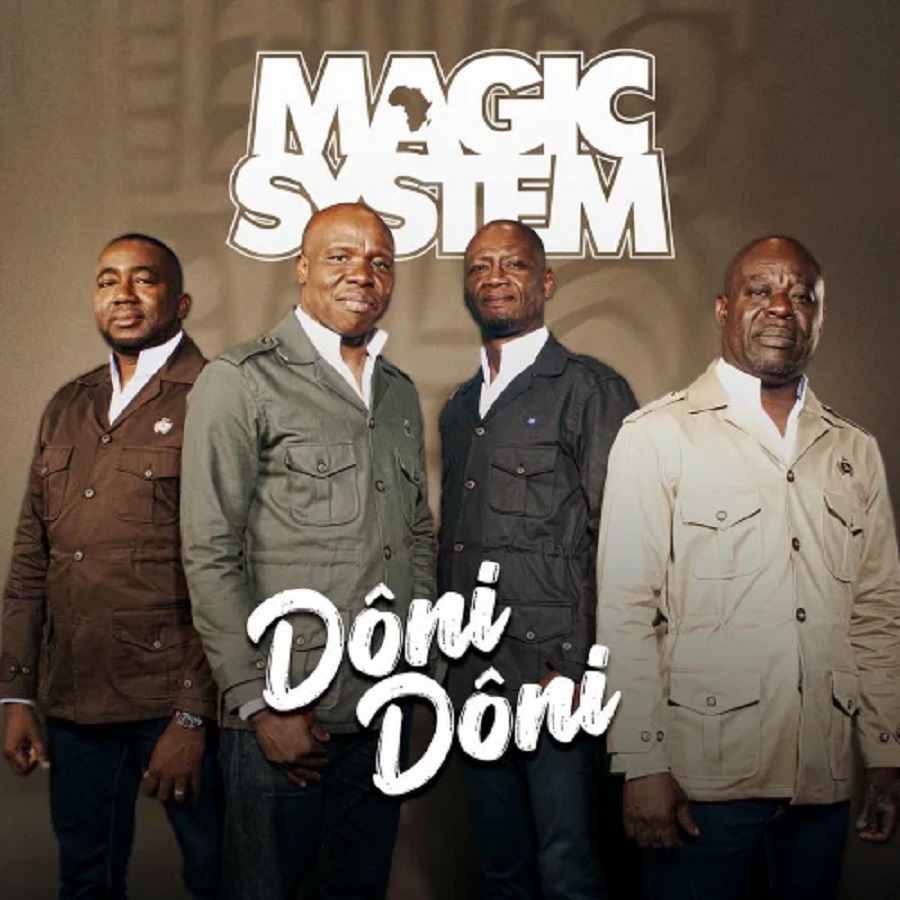
Three decades is a lifetime in pop music. Most groups do not survive it. Those who do often become nostalgia acts, trapped in amber, endlessly recreating the hits that made them famous. Magic System, the quartet from Abidjan that put Ivorian zouglou music on the world map, has chosen a different path with their 12th studio album “Doni Doni”. The album was released for their 30th anniversary and is a record about patience, perseverance, and the slow, steady climb from the streets of Anoumabo to the biggest stages in the world.
The title itself, which means ‘slowly’ or ‘bit by bit’, sets the tone. This is not the explosive, festival-ready Magic System of their breakthrough hit “Premier Gaou” or the international crossover hit “Magic in the Air”. Instead, A’Salfo, Goude, Tino, and Manadja deliver something more contemplative, mature, and perhaps necessary in today’s instant-gratification music landscape. They celebrate not only their survival but also dissect what it has cost.
The album opens with the title track, a philosophical manifesto that feels like the group is speaking directly to younger artists climbing their way up. It is a reminder that Magic System’s journey did not happen overnight. Their debut, “Papitou,” from 1997, flopped spectacularly, and every major label told them it would go nowhere before they financed “Premier Gaou” themselves. That hard-earned wisdom permeates “Doni Doni”, especially on “On est degba” (‘We are disillusioned’), which tackles the disappointments and fractures that come with long-term creative collaborations. Sung in Ivorian jargon, it is raw, honest, and feels like eavesdropping on a discussion that has been brewing for years.
What immediately stands out is the production approach. Magic System has wisely collaborated with new-generation contributors: rappers like Didi B on “Même pas peur”, singer Noémie on “À l’occasion de rien” and Tamsir. They create a bridge between different eras of Ivorian music. These are not symbolic collaborations; they are genuine exchanges that bring fresh energy without erasing the group’s identity. The collaboration with Sidiki Diabaté on “Kana ta” is particularly moving, a tribute to his late father, kora master Toumani Diabaté, and underscores Magic System’s dedication to honouring African musical heritage.
The group’s return to their zouglou roots is deliberate and effective. Tracks like “On est des gars” revive the original spirit of the genre: that urban, socially conscious sound that emerged from Ivorian university campuses in the 1990s. After years of criticism for drifting into more commercial coupé-décalé and electro-pop territory, Magic System seems to stare their critics straight in the eye. A’Salfo’s voice remains remarkably intact, benefiting from what he calls ‘l’école du voyeur’: years of singing without microphones at funerals and street performances that built a rock-solid technique.
“Kiaman”, the album’s unexpected centrepiece, pays homage to Algerian singer Ali Chikh Tahar and weaves North African influences into the West African framework. It is a bold move reflecting Magic System’s pan-African vision and their understanding that borders matter less than shared experiences. The message, they explain, speaks to our increasingly dehumanised world, a theme that resonates across continents.
Yet “Doni Doni” also has slower moments. With 39 minutes across 12 tracks, the album is economical, but some songs like “L’Argent propre” and “Woyo” feel more like sketches than fully realised ideas. The group’s decision to release tracks gradually, one by one, with individual videos, is innovative in theory but risks fragmenting the album’s narrative cohesion. And while the collaborations add freshness, a few songs could have benefited from tighter editing.
The album’s most powerful moments come when Magic System confronts the personal cost of their success. “Tu m’en veux” (‘You hold a grudge against me’) and “Jalousie” examine how fame strains friendships and sows jealousy, themes rarely tackled so directly in African pop music. These are not celebrations; they are reckonings. The closing track “Oh Seigneur” feels like a prayer, a plea for guidance as the group navigates their fourth decade together.
What makes “Doni Doni” essential listening is not perfection, but honesty. In an era where African music is finally receiving the global recognition it deserves, Magic System refuses to lean on past glories or chase trends. They offer a masterclass in sustainability: evolve without losing yourself, mentor without condescension, and remember that the journey matters more than the destination. If you want to understand why they have endured thirty years while countless others fell away, listen to “Doni Doni” and hear a group that learned early that you cannot sprint a marathon.
For anyone who remembers going wild to “Bouger Bouger” in 2005, this album offers something different but equally valuable: the wisdom of artists who have seen it all and can tell the tale, slowly but surely. (7/10) (Universal Music Africa)
 Maxazine South Africa
  Nijaga Terborg