 By Maxazine South Africa
Dozens of new albums arrive at Maxazine’s editorial staff every week. There are too many to listen to, let alone review them. It ensures that too many albums are left behind. And that’s a shame. That is why today we post an overview of albums that arrive at the editors in short reviews.
Photo (c) Jorge Fakhouri Filho
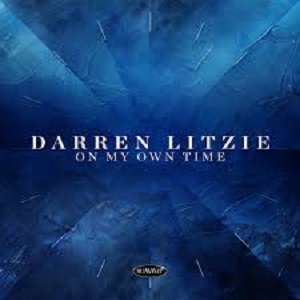
Darren Litzie – On My Own Time
According to the credits, ‘On My Own Time’ is an album by pianist Darren Litzie, but in our opinion, drummer John Riley and bassist Chris Deangelis could have been more prominently featured on the cover. They are responsible for the grooves on this album, which largely consists of Litzie’s own compositions. In addition, the trio treats its audience to a few beautifully executed covers, including Monk’s ‘In Walked Bud’ (featuring a counter-melody that makes the piece more exciting, cleverly done) and a very special version of the Zombies hit ‘Time Of The Season’. Yes, Litzie’s piano playing is virtuosic, with original and surprising interpretations. A good example is the rendition of Suesdorf’s classic ‘Moonlight in Vermont’, which has become darker in Litzie’s interpretation. Yet it is always Riley’s drumming that draws attention. Take a track like ‘Just After Three’, essentially a simple, up-tempo waltz, but Riley’s brushes give it a wonderful swing. Or ‘If Only I Could Forget’, an original composition with a slow yet driving, compelling 12/8 groove where Riley keeps it sparse while proving that ‘less is more’ certainly applies to jazz drummers. Few drummers manage to develop a truly personal vocabulary, but Riley has the technique and sound to be counted among the greatest, in the category of Buddy Rich, Art Blakey, and Max Roach. This album should really have been credited to John Riley. (Jeroen Mulder) (8/10) (Summit Records)
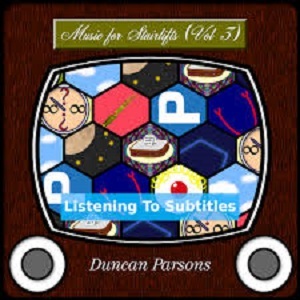
Duncan Parsons – Music for Stairlifts (Vol 3): Listening To Subtitles
Multi-instrumentalist Duncan Parsons conceived ‘Music for Stairlifts’ as an experiment in improvisation, entirely solo. Without drums, it features various guitars, bass, and Rhodes. On volume three, there is one more instrument: the celeste. Most tracks start with a single instrument, gradually adding others (and vocals). Both wordless and imaginative singing are used as instruments. There are often many repetitions, but subtle additions and details keep it interesting. Even when rhythms clash, balance is maintained. The mix of high and low tones is unusual, as is the interplay between rhythm and melody. The tracks are intriguing: sometimes minimalist, sometimes complex. There are occasional accelerations or unexpected turns. The ambient music contains funk and a hint of rock. The sound is excellent, allowing both details and textures to come through clearly. ‘Music for Stairlifts (Vol 3): Listening To Subtitles’ is a remarkable album to enjoy in complete calm. (Esther Kessel) (8/10) (Self-Produced)
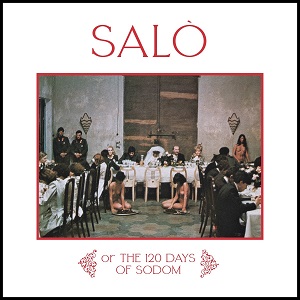
Salò or The 120 Days of Sodom – Original Sound Track
Salò or The 120 Days of Sodom is a controversial film by Pier Paolo Pasolini made in 1975. The soundtrack is now officially released for the first time by the British label Cold Spring. ‘Salò o le 120 giornate di Sodoma’, the film’s original title, depicts the spiritual and physical humiliation of nine boys and nine girls by four fascist leaders. The imagery is highly disturbing. What music suits this? Probably not immediately Bach, Chopin, Puccini, and Orff. Yet the classical works of these composers form the foundation, combined with Ennio Morricone’s own compositions. Not all pieces are performed in full: you hear fragments from Bach’s Pastorale in F major, various Chopin preludes, the Veris leta Facies from Orff’s ‘Carmina Burana’, and Puccini’s ‘Inno a Roma’. Beautiful music for a film in which many viewers reportedly could not stomach the visuals. Let’s focus on the music. (Jeroen Mulder) (7/10) (Cold Spring)
Joe Bonamassa – B.B. King’s Blues Summit 100
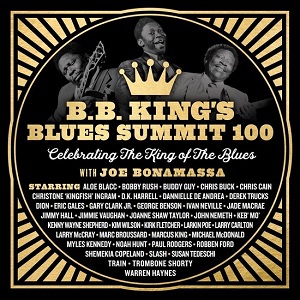
Joe Bonamassa releases the double album ‘B.B. King’s Blues Summit 100’ on 6 February. Many guest musicians of all ages participated. Slash, Marcus King, Joanne Shaw Taylor, and others let you enjoy blues, soul, jazz, and a touch of rock. During duets or harmonies, the voices blend well. Several tracks end in a fade-out. Most tracks are largely laid-back. Where the tempo is higher, rhythm and music remain fairly traditional. The balance is good, including brass and rhythm sections. Piano or Hammond is generally subtle but nicely added. The guitar playing is solid, and the passion is often felt, though many guitarists play it safe. The covers have an old-school blues vibe. One of the few surprises is the strings in ‘The Thrill Is Gone’ (feat. Chaka Khan & Eric Clapton). Not essential, but a fine tribute to the 100th birthday of the legendary B.B. King. (Esther Kessel-Tamerus) (7/10) (Provogue Records)
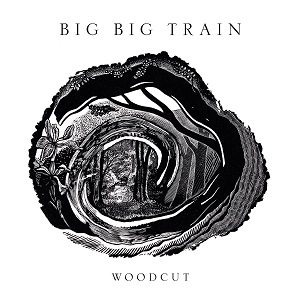
Big Big Train – Woodcut
It is only February, yet the best prog album of 2026 may already be on the shelves. Let’s say Big Big Train has set the bar extraordinarily high with ‘Woodcut’, a concept album inspired by the art and life of Edvard Munch. Everything on this album works, crafted in the finest traditions of symphonic rock, including the orchestral intro ‘Inkwell Black’ leading into ‘The Artist’, introducing the artist and his struggle for perfection. Perfection. In everything, you hear that Big Big Train strived for the same perfection… and almost achieved it. Compositions, arrangements, production—all contribute to a brilliant album that plays like a large symphony, naturally building to the apotheosis in the grand finale, the closing ‘Last Stand’. Where many bands in this genre become bombastic, Big Big Train does everything with utmost care. It’s impossible to choose a single track to define the album: it is meant to be experienced in its entirety, like a work of art. Munch created much of his work by processing deep trauma, shaping his best pieces. Perhaps Alberto Bravin wrote much of ‘Woodcut’, processing the death of frontman David Longdon. Yet whereas Munch’s raw edges remained visible, especially in his engravings, ‘Woodcut’ may be slightly too perfect. Nitpicking, because this is unquestionably the most impressive work Big Big Train has released to date. (Jeroen Mulder) (9/10) (InsideOutMusic)