
 By Maxazine South Africa
Dozens of new albums arrive at Maxazine’s editorial staff every week. There are too many to listen to, let alone review them. It ensures that too many albums are left behind. And that’s a shame. That is why we post an overview of albums that arrive at the editors in short reviews today.
Photo (c) Jorge Fakhouri Filho
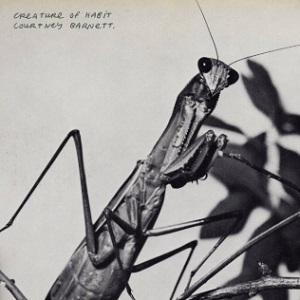
Courtney Barnett – Creature of Habit
On her fourth solo album, “Creature of Habit”, Courtney Barnett returns to the raw, jangly indie rock that made her name, after a relatively quiet period that took her to Los Angeles and led to the closure of her label Milk! Records. The opener “Stay in Your Lane” sets the tone with stubborn energy, while “Site Unseen” with Katie Crutchfield of Waxahatchee grows into a sunny collaboration full of sliding guitars and beautiful harmonies. On “One Thing at a Time”, none other than Flea is heard on bass, giving the song a restless momentum. The lyrics remain characteristically Barnett: dryly humorous, emotionally honest and filled with everyday observations that hit something deeper. With Stella Mozgawa behind the drum kit, the whole sounds more focused and powerful than on her predecessor “Things Take Time, Take Time”. The sequencing is carefully crafted: tension alternates with vulnerability, and the whole has the cohesion of a statement about change and courage. “Creature of Habit” is Barnett at her sharpest. (Anton Dupont) (8/10) (Mom+Pop / Fiction)
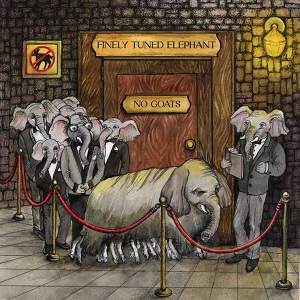
Finely Tuned Elephant – No Goats
‘No Goats’ is the third studio album by this four-piece from Ottawa with a completely idiosyncratic sound and an equally distinctive name: Finely Tuned Elephant. Guitarist Jordan Robinson, bassist Cyrus Robertson Orkish, drummer Kyle Iveglia and keyboardist Alex Lugli play fusion, but add elements from classical jazz and even prog. Robinson’s guitar is central to the sound. No endless shred parts with a thousand notes per second, but concise solos that blend with the entire composition. At first, the album sounds like a tribute to Japanese fusion from the 1970s and 1980s, but thanks to the occasionally biting, raw guitar parts, it is less polished: Casiopea with an edge. Or Weather Report, as that parallel can also be drawn when the basslines take the lead in the composition, as only Pastorius could. The influences are audible, but it would do this Canadian quartet a disservice to compare them only to the greats of the past. ‘No Goats’ contains eight sublime fusion tracks, in which each instrument is given space, and the listener is regularly surprised by unexpected harmonies or rhythmic shifts. Not a nostalgic exercise, but proof that great fusion is still of this time. (Jeroen Mulder) (9/10) (Finely Tuned Studios)
Black Label Society – Engines Of Demolition
‘Engines Of Demolition’ is the twelfth studio album by Black Label Society, the band of guitarist, singer and songwriter Zakk Wylde, who broke through when he was chosen at the age of 20 as the successor to Jake E. Lee in Ozzy Osbourne’s band. In 1998, he formed his own band, where he not only plays guitar but also takes on lead vocals. He is also the driving force behind the tribute band Zakk Sabbath and replaced the late Dimebag Darrell during Pantera’s reunion tours. He has also released several solo albums. The songs on ‘Engines Of Demolition’ were written between 2022 and 2025 while he was on tour with Pantera. The wheel is not reinvented on this album either. It features a well-chosen mix of tough, blues-based biker rock and emotional ballads, with the closing track, ‘Ozzy’s Song’, being the most beautiful and personal. A piano ballad dedicated to his late mentor Ozzy Osbourne. At 14 tracks, the album is somewhat on the long side, and after the strong opener ‘Name In Blood’, it falls back into the familiar Black Label Society mode, which is high in quality but offers little new to those who are not die-hard fans. (Ad Keepers) (7/10) (Spinefarm)

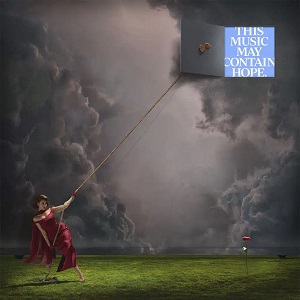
RAYE – This Music May Contain Hope
This is going to become a trend: megalomaniac productions in which the boundaries between jazz, pop, soul and even classical music blur. Late last year, Rosalía released her “Lux”, a record that was highly praised. On Friday, “This Music May Contain Hope” by RAYE was released: a theatrical concept album centred around the four seasons (including references to Vivaldi) as a metaphor for change and personal growth. So far, the praise has been less effusive than the album itself. RAYE boldly chooses her own path in seventy minutes, for which no expense has been spared. As an illustration, the British singer-songwriter enlisted an almost endless list of musicians, who she then had perform in no fewer than six studios. The result is an album in which ideas overlap, sometimes even within a single track. What stands out is RAYE’s formidable range and the ability to make her voice sound alternately raw and polished. That voice, and the candid lyrics, are the only anchor in a cacophony of styles and arrangements with unexpected modulations and ‘big band outros’. Where “Lux” blew us away, “This Music May Contain Hope” sometimes sounds just a little too contrived. Still, this is an artistically bold statement. It may be a bit messy, but this record is certainly impressive. Tip: buy this album on vinyl, as the artwork is a true piece of art. (Jeroen Mulder) (7/10) (RAYE / Human Re Sources)
Flea – Honora
Flea: That is the man who, bare-chested with his bass guitar on his knees, jumped across the stage with the Red Hot Chilli Peppers, the funk band he co-founded. But even Flea is getting older. The man is now 64 and returns to his first musical experience: jazz. His stepfather introduced Michael Peter Balzary to Dizzy Gillespie and Miles Davis. The trumpet was Flea’s first love, and that instrument is especially prominent on “Honora”. Flea reveals a completely new side of himself in his trumpet playing. The explosive style as a bassist makes way for restrained, sometimes almost meditative playing, where the command of the instrument is nothing short of admirable. On “Honora”, Flea is not playing to impress, but to explore musical boundaries. He does so very subtly, although the raw edge is never far away. The collaborations on the album are also surprising. Thom Yorke of Radiohead appears on “Traffic Lights” and Nick Cave lends his dark, spellbinding voice to “Wichita Lineman”. “Honora” is a true metamorphosis of an iconic bassist who proves here that he possesses tremendous musical depth and dares to share it with us in the most intimate way. (Jeroen Mulder) (8/10) (Nonesuch Records)