 By Maxazine South Africa
Dozens of new albums arrive at Maxazine’s editorial staff every week. There are too many to listen to, let alone review. This ensures that too many albums are left behind, and that’s a shame. That is why we post an overview of albums that arrive at the editors today, with short reviews.
Photo (c) Jorge Fakhouri Filho
Rachel Chinouriri – I Think I Spoke Too Soon
On her new EP, British singer Rachel Chinouriri takes an exciting musical step forward by combining richly layered pop and electronics with deeply personal themes. Whereas her earlier work was still dominated by organic indie, the tempo increases considerably here. On standout tracks such as “One Song Away From Crying” and “All I Ever Asked”, she explores sincerity and recovery with remarkable vocal control. The production skilfully hovers between abrasive synthesisers and a crystal-clear vocal line that never gets drowned out by the instrumental bustle. At times, the directness of the lyrics borders on overexplaining, but the musical layering keeps everything in sharp balance. With its refined closing track, she also delivers an impressive moment of calm that underscores the album’s emotional richness. With this release, Chinouriri demonstrates mature artistic growth and delivers an impressive document of its time that stays with the listener long afterwards. (Elodie Renard) (8/10) (Parlophone)

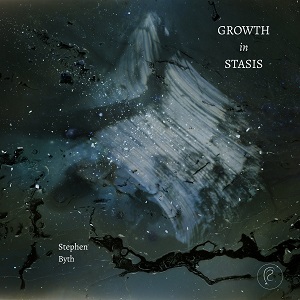
Stephen Byth – Growth in Stasis
Growth in stasis. That is the literal translation of the title of this second album by Australian saxophonist and composer Stephen Byth. The title refers to Wayne Shorter, the legend who claimed that uncertainty was precisely what created the space to discover and thereby grow. On this record, however, there is little sign of that uncertainty, let alone stasis: Byth treats his audience to a cross-section of jazz, from the bop of the opening track “Seed of Thought” to the cinematic “The Light in Everything”, in which his collaboration with pianist Yessaï Karapetian gives the piece a wonderful sense of dynamism. The highlight is “Cutting Ties”, a seven-minute composition that repeatedly takes a different and surprising turn. It is also one of the more complex pieces, and that must be noted about this album: it is not light listening. As with Shorter, everything is always about the melody, but the rich arrangements create layers that only reveal themselves after a few listens. But then you hear new elements each time, making “Growth in Stasis” a particularly successful jazz album, perhaps even one of the best albums of the year. (Jeroen Mulder) (9/10) (Stephen Byth)
Nieve Ella – How Long Will It Take?
Nieve Ella has made a big, messy and wildly relatable debut album. “How Long Will It Take?” revolves around the question of how long it takes to change, and the British singer answers it with full force. The single “Drive” sets the tone with a heavy bass and swaggering drums, while “Standing on a Pane of Glass” shows just how deep things can go when you hit rock bottom. “I’m Not Dead” and “Back to Basics” follow one another, presenting a singer who turns her doubts into self-confidence. The title track is a sweeping ballad in which she lets her voice swell like a storm. Producer Jamie Rendle and co-writer Finn Marlow give the whole thing a grand, almost theatrical feel, with gritty guitars and occasional unexpected instruments, as in “At Any Cost”. Not everything is equally daring, as “Romance Is a Desert” and “Love:Hate” take a safer route. But this is an artist who already knows how to captivate an audience live, and that strength comes across here. A debut to be proud of. (Daniel Harris) (8/10) (Artist Theory)
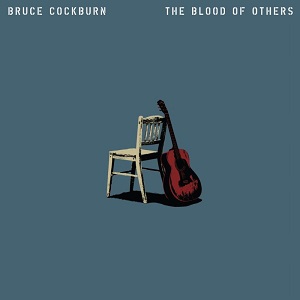
Bruce Cockburn – The Blood of Others
On “The Blood of Others”, Bruce Cockburn does not look in the mirror but in his record collection. His 39th album consists of fifteen songs by other artists, chosen because they have been in his head and fingers for decades. Producer Colin Linden keeps the approach stripped back: mainly Cockburn, his acoustic guitar and a gravelly voice. “Wish I Was in Heaven Sitting Down” opens as an unadorned gospel blues, while “Buddy Bolden’s Blues” swings with a ragtime guitar and raw vocals. “Louis Collins” by Mississippi John Hurt sounds sunny, while the story remains dark. “That’s All Right, Mama” is slowed down considerably and features an additional guitar part from Linden. Jazz, folk and film classics also make an appearance, from “As Time Goes By” to “Four Strong Winds” and “Les Feuilles Mortes”, on which he sings in French. The guitar playing is precise and restrained, never stretched out. This makes the album intimate, almost like a conversation at the kitchen table. There is little variation in the instrumentation, but that is not the point. Cockburn shows that an interpretation only works when the performer means every note. (Cian Murphy) (8/10) (Sunset Boulevard Records)
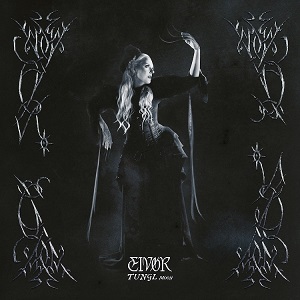
Eivør – Tungl
With “Tungl”, Eivør releases her eleventh album, her first for Nuclear Blast. The Faroese singer combines Nordic tradition with electronics and trip-hop, opting for a dark, cinematic atmosphere. Seven of the ten songs are sung in Faroese. The opener “Og mánin græt” draws on the tradition of Faroese chain dancing and sets it to pulsing electronic rhythms. “Healer” and “Verjugarðar” showcase drama and synth-pop, while “Fangað”, featuring her sister Elinborg, places throat singing in an almost club-like setting. “Hinumegin” is the moment of calm, a slow ballad in which the electronics recede into the background and her voice takes centre stage. Those familiar with her earlier work will hear how far she has moved away from the folk of her early days. The production is detailed and calls for headphones. Opinions differ on the results. Some listeners appreciate the layered sound and variety, while others miss depth and feel the ideas are spread too thinly across ten tracks. What is certain is the power of Eivør’s singing, which shifts between whispering and ritualistic expression. “Tungl” is not an obvious album, but it does demonstrate confidence in following its own path. (William Brown) (7/10) (Nuclear Blast)