
 By Maxazine South Africa
Dozens of new albums arrive at Maxazine’s editorial staff every week. There are too many to listen to, let alone review them. It ensures that too many albums are left behind. And that’s a shame. That is why we post an overview of albums that arrive at the editors in short reviews today.
Photo (c) Jorge Fakhouri Filho
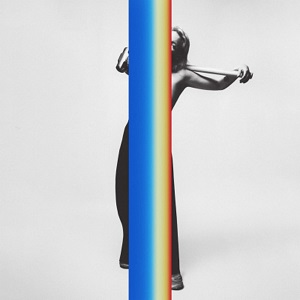
Sylvan Esso – Ow ∞
Sylvan Esso themselves call ‘Ow ∞’ a free fall, and after a few tracks that already feels right. Amelia Meath and Nick Sanborn took four years over it, and that can be heard in the abundance of ideas that sometimes emerge together, sometimes separately. ‘Hot Slob’ presents the album as messy and unapologetic, while ‘Concrete Glen’ builds around a sample by Sigur Rós into a nocturnal haze. What stands out is that many songs deliberately sound unfinished, with vocals that turned out to be the first take and rhythms from as many as six different drummers mixed together. That idea is more interesting than the execution, because not every track benefits from that loose approach. ‘Right to Left’ and ‘On & On’ do convince, with a clarity that is missing elsewhere. In other places, the album gets bogged down in repetition without adding anything new. Sylvan Esso remain an intriguing duo, but ‘Ow ∞’ would have benefited from a little more restraint in the studio. (William Brown) (7/10) (Psychic Hotline)
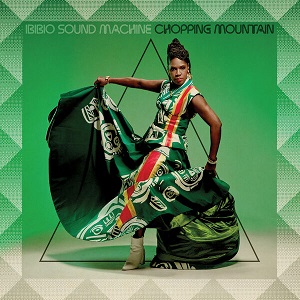
Ibibio Sound Machine – Chopping Mountain
On ‘Chopping Mountain’, Ibibio Sound Machine builds on the sound that has characterised the London band for six albums already, a mix of afrobeat, disco, funk and post-punk. Producer Max Grunhard, also the group’s saxophonist and keyboard player, takes the lead himself for the first time since ‘Doko Mien’, and it works well. Singer Eno Williams switches effortlessly between English and Ibibio, giving ‘Return to Sender’ an extra layer of urgency. That song, born from a car accident that she describes as an attack by invisible forces, is one of the album’s strongest moments. ‘Concept of Love’ opens with a question that the vocoder repeats until it sticks, carried by an afro-disco rhythm that is difficult to resist. ‘Give Me Peace’, featuring Dele Sosimi, rides on a simple but effective chorus line. The album loses some momentum here and there towards the end, but the band’s energy largely remains intact. Ibibio Sound Machine once again shows that community spirit and danceability do not have to be mutually exclusive. (Tobias Brown) (8/10) (Merge Records)
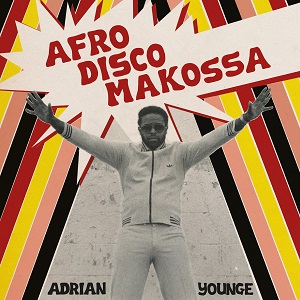
Adrian Younge – Afro-Disco Makossa
On ‘Afro-Disco Makossa’, Adrian Younge poses a question that immediately sparks curiosity, what would a Ghanaian producer have made in 1976 if they had wanted to record an American disco album for their own audience. The answer is compact, six tracks long, and breathes the analogue warmth that Younge has already demonstrated through his label Jazz Is Dead in collaborations with Tony Allen and Ebo Taylor. Opener ‘Feel The High Life’ sets the tone with brass that shines and a rhythm section that moves smoothly along. ‘Shake Down’ and ‘Number One’ push the whole thing further onto the dancefloor, with bass lines that bounce back like elastic. ‘Fire In The Disco’ adds a cinematic layer with keyboards that would fit just as well in a soundtrack. The title track brings everything to a calm close, like a final dance before the lights come on. Younge combines makossa, afrobeat and disco without reducing any of those styles to background. A short, focused album that knows exactly what it wants to be, and delivers on it. (Elodie Renard) (8/10) (Linear Labs)
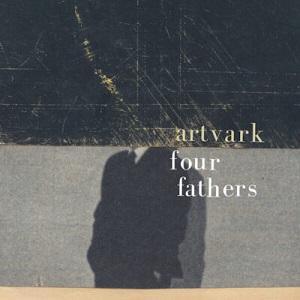
Artvark – Four Fathers
The core of Artvark is still the four saxophones. Yet the Artvark Saxophone Quartet sounds just a little different on ‘Four Fathers’, but on this album too, Rolf Delfos, Bart Wirtz, Mete Erker and Peter Broekhuizen show how rich the saxophone’s sonic palette is. Whereas the previous album ‘Mother of Thousand’ was a tribute to motherhood, the four fathers are now central to fifteen compositions. Four different fathers, and that results in a versatile album that does not become boring for a second despite the sparse line-up. On the contrary, you constantly hear something new in the pieces. From the subdued ‘The Persistent Hum’, for example, it moves to the more frivolous ‘Slidin’ and Ridin’’ on which Artvark also makes use of additional instrumentation in the form of electronics and percussion. The focal point on ‘Four Fathers’ is the triptych ‘Give Me Quiet’. In these three pieces you hear what makes Artvark’s music unique: breath. Everything has room to breathe and you can hear that breath. With every breath there is the tension of waiting for which note follows that breath. The silence between inhaling and exhaling is at least as important as the note itself. Artvark dares to let that silence exist, without immediately wanting to fill it. Four saxophonists breathe, listen to each other’s breathing, respond to it and sometimes consciously leave something unfinished hanging in the air. As a result, ‘Four Fathers’ becomes almost physically tangible. You hear not only the instruments, but also the people behind them. And perhaps that is precisely where the strength of this album lies: music arises here not only from notes, but also from the fraction of a second in which those notes are not yet there. (Jeroen Mulder) (8/10) (Dox Records)
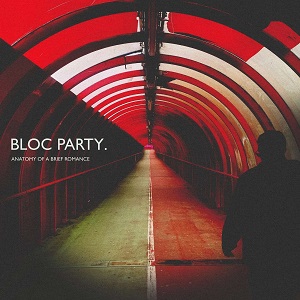
Bloc Party – Anatomy Of A Brief Romance
Bloc Party sounds hungrier on ‘Anatomy Of A Brief Romance’ than in years. The band delivers an album that closely follows the course of a relationship, from the first spark to the aftermath, and does so without fuss. Producer Trevor Horn gives Russell Lissack’s guitars more shine, but the sharp edges remain intact. Opener ‘Coming On Strong’ immediately sets the tone with an ominous bass and a chorus that grabs you by the throat. ‘Love Bombs’ builds on synths that crackle like a short circuit, while Kele Okereke sings about a love that becomes too big too quickly. Further on, the mood changes. ‘Worst Birthday Ever’ is bitter and direct, while ‘Now We Can’t Be Friends’ puts the pain on the dancefloor instead. Not every song maintains the same pace, and towards the end the tension fades somewhat. Still, this remains an album that dares to grate, musically and emotionally. Bloc Party proves that after seven albums they still have something to say, and that they would rather do so unpolished than safe. (Anton Dupont) (7/10) (cOnTAGIOUS LTD)
 William Brown
  Daniel Harris