 By Bianca Fernandes
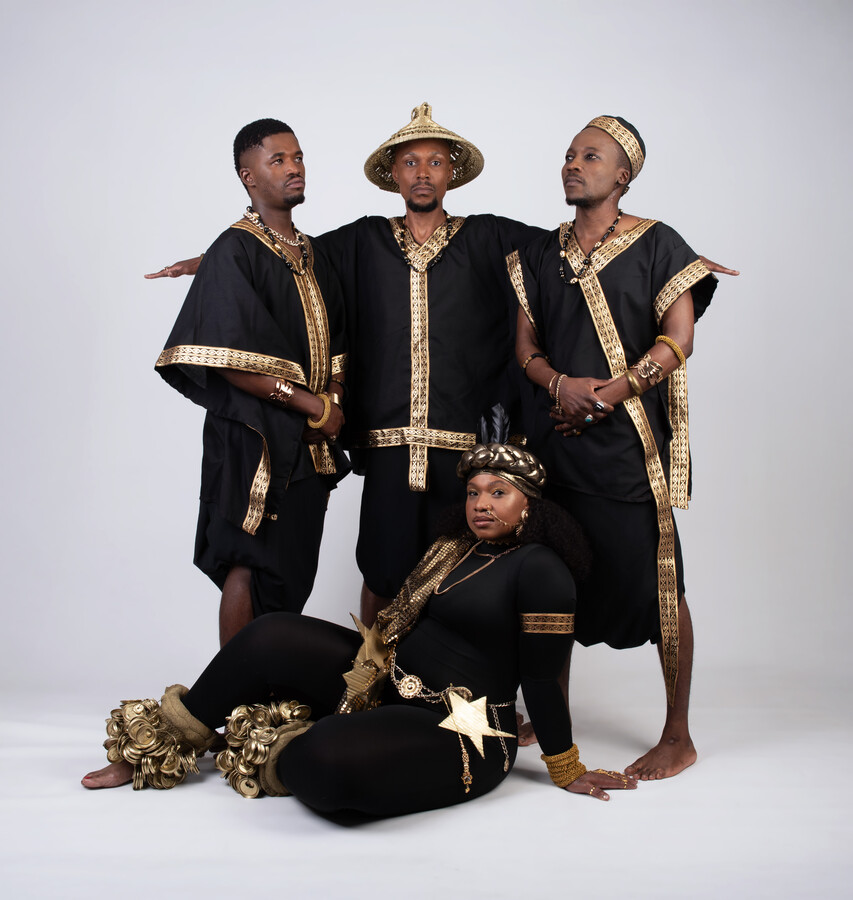
 There are bands that make music, and then there are bands that attempt to build an entire worldview around it. South African collective L8 Antique belongs firmly in the latter category. Founded in 2007, the collective describes itself not simply as musicians, but as preservers of heritage and custodians of ancient knowledge. Their philosophy is summed up in two words: Ancestral Intelligence — or A.I.
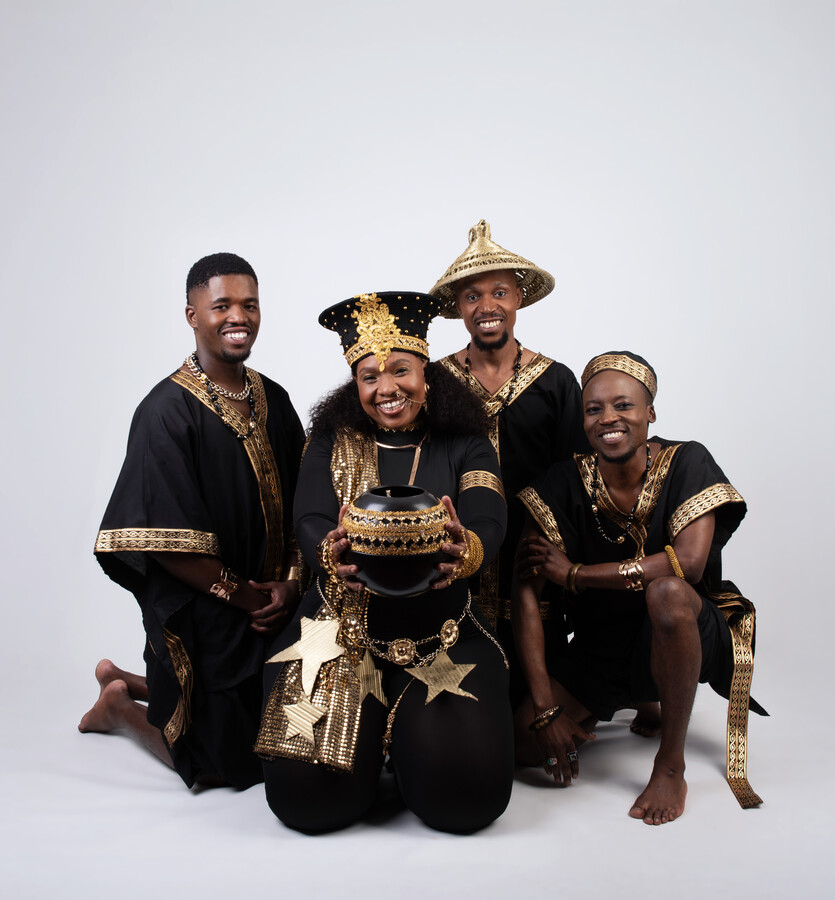
Now, with their latest work and the developing concept of NTU Futurism, L8 Antique are looking simultaneously backwards and forwards. Their music draws deeply from African indigenous traditions, languages, spirituality and philosophy, while embracing technology, electronic production and artificial intelligence as tools for imagining what comes next. For L8 Antique, these ideas are not opposites. They are part of the same continuum.
“The inspiration behind the title NTU Futurism came when we were recording our album in the studio in December 2024,” the collective explains. “That’s when the spark happened.” The concept quickly became much more than an album title. “NTU Futurism is about creating the future now by uniting technology, spirituality, and music as one energy.”
At its heart is NTU, understood by the collective as the universal life force connecting all existence. Human beings, nature, objects, space, time and ways of being are not separate categories, but interconnected expressions of the same energy. For L8 Antique, music becomes the vehicle through which those connections can be explored.
“We are the bridge between the past, the present, and the future,” they say. “To me personally, it is not just a concept; it is also a genre that is going to be recognised globally.”
Remembering to Move Forward
The philosophy behind NTU Futurism has also shaped the way L8 Antique approach composition. Rather than beginning with a conventional question such as what a song should sound like, the collective asks what energy it is creating and what that energy connects. Their musical identity, they suggest, was established long before the recording process itself.
“It begins at the very inception of the music — when an idea moves from a simple voice note to the musicians who learn, interpret, and articulate it.” The musicians themselves often become the first test of whether the idea is working. “They are often the first to confirm that it sounds unlike anything they have heard before.”
That refusal to conform is deliberate. L8 Antique’s starting point is indigenous music, particularly chants and trance traditions. From there, the sound expands, incorporating different rhythms, languages, instruments and technologies. African folk and indigenous music remain particularly close to the collective’s heart. Rather than restricting themselves to one linguistic or cultural tradition, they draw from many tribes, approaching those traditions through research and exploration.
The result is a sound that is difficult to place neatly inside a conventional genre box. And that is precisely the point.
Emandulo, Namhlanje, Kusasa
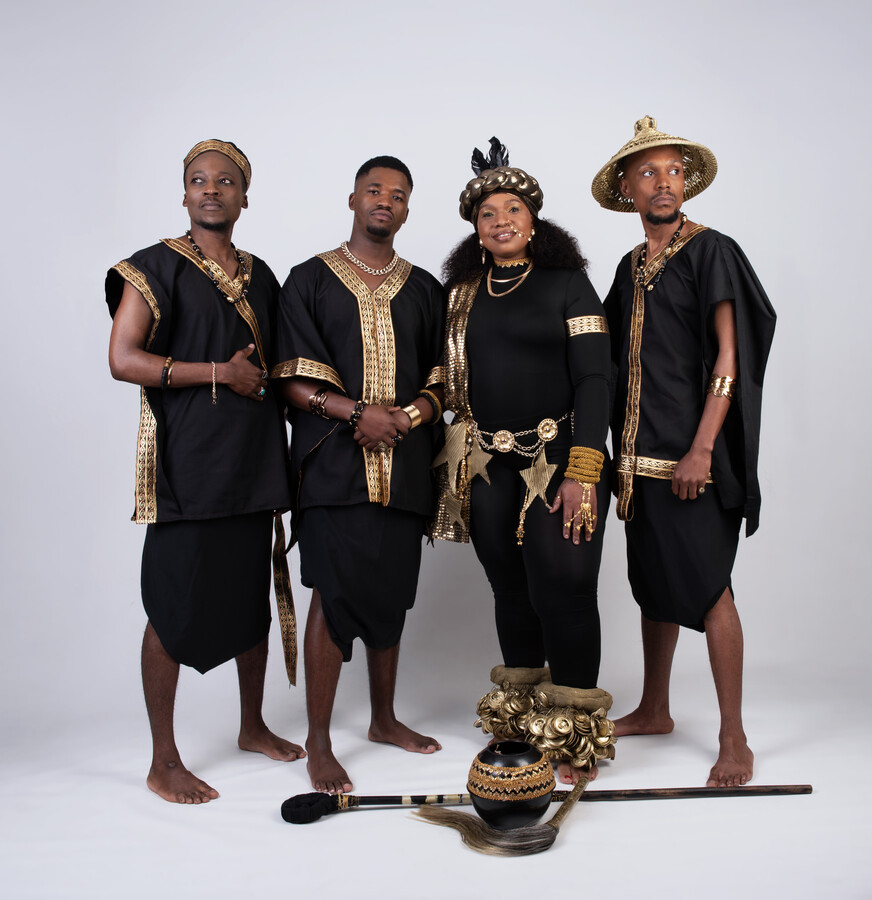
L8 Antique’s philosophy divides time into three interconnected dimensions: Emandulo, Namhlanje and Kusasa — the past, the present and the future. Emandulo lives in language, history and the way elders interacted with one another. Namhlanje is represented by the contemporary instruments and technologies used to create the music.
Kusasa represents growth through memory — the idea that moving forward requires remembering who we are. Artificial intelligence, inevitably, forms part of that future. “We cannot run away from it,” the collective says.
Technology, however, is not viewed as a replacement for tradition. Instead, it becomes another instrument through which heritage can survive and evolve. During the recording process, MIDI and software plug-ins were used to recreate instruments the musicians could not physically access. For L8 Antique, that is not a compromise. It is preservation through innovation.
“History can be altered, but when it is properly documented and preserved, people will know who they are and where they come from.”
Music as Sacred Technology
Perhaps the most distinctive aspect of L8 Antique’s philosophy is the way they understand performance. They don’t describe what happens on stage as simply a concert. They call it a ceremony.
“We describe our work as sacred technology,” they explain. “Music has the power to heal, align, transform, and restore.” The idea has deep roots in African spiritual practice, where music, chanting and singing have historically been used as part of healing and ceremonial processes. That philosophy carries directly into the studio and onto the stage.
The collective says spiritual rituals have become part of their recording process, to the point that engineer and co-producer Matthew Fink has asked Itumeleng to burn impepho in the studio to help create the appropriate space. On stage, that ceremonial approach becomes an act of shared participation.
“Impepho helps create that ceremonial space and invoke ancestral guidance,” they explain. “It reminds us that this is an energetic experience shared by performers and audience together.”
The audience is therefore never simply watching. They are participating. And L8 Antique say the response can be deeply personal. After performances, audience members sometimes approach them to say that what they experienced felt like a healing experience.
That connection became particularly obvious during the COVID-19 pandemic, when live performance suddenly lost its physical audience. The absence demonstrated just how important that shared energy had been. “Together we build an energetic and spiritual experience,” they say.
Their hope is that audiences leave feeling awakened, uplifted and connected — not only to the musicians, but to themselves, to one another and to something greater.
Ubuntu in Action
Underlying everything is Ubuntu. For L8 Antique, Ubuntu is not simply a familiar philosophical concept. It is NTU in action.
“Ubuntu is NTU in action,” they explain. “NTU is the universal life force that connects all existence, and Ubuntu expresses that connection through how we relate to one another.” That message informs the lyrics, the music and the band’s broader mission.
Songs such as Babodje, performed in Khelobedu, carry messages about love, respect and unity, while songs in isiZulu and Sepedi similarly explore divine remembrance and human connection. The collective sees South Africa as the cultural soil from which both L8 Antique and NTU Futurism have grown.
Yet their ambitions are not confined to South Africa. They are explicitly global. “We want the world to experience the spiritual sounds of Africa, especially from the SADC region.”
That international ambition does not mean abandoning their roots. Quite the opposite. For young African musicians, L8 Antique’s message is straightforward: embrace where you come from. “It is your superpower,” they say. “It is what sets you apart.”
A Sound Without Borders
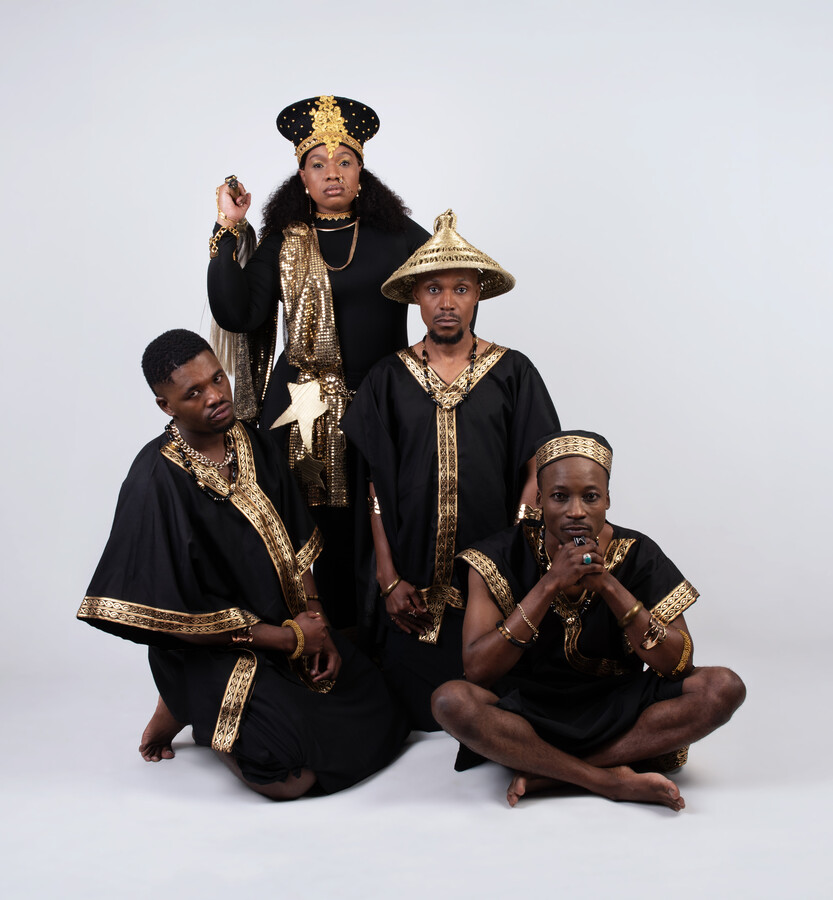
Although L8 Antique’s music is firmly rooted in African indigenous traditions, the collective doesn’t see those traditions as isolated from one another. “If you look closely, all these musical traditions are intertwined. They form one indigenous sound.”
Outside influences have certainly played a role, but rather than treating those influences as separate ingredients, L8 Antique absorb them into something they regard as uniquely their own. Improvisation is equally important.
For the collective, improvisation begins with the simple act of someone expressing what they hear within themselves. Their songs follow the same principle, allowing spontaneous expression to enter the music from its earliest stages. There is therefore no rigid formula.
“We don’t really plan,” they say. “It’s freedom of expression. That’s what music is — a universal language.” Every song, however, carries intention. “Each song is a teaching. Each song is a prayer.”
That is why the album is not viewed simply as a collection of recordings. “This album is not just a collection of songs — it is made with love.”
From Heritage to Movement
L8 Antique believe music has always had the ability to influence society far beyond the stage. It can shape fashion, politics, emotions, sports culture and communities. Events such as Live Aid demonstrated the capacity of music to bring people together around a common cause.
The collective believes the same principle can apply to NTU Futurism. “It is the intention of the message we are relaying that makes it a movement.” That message is ultimately one of unity. “We may look different, but we are one.”
For L8 Antique, musical evolution is therefore inseparable from human evolution. They are not interested in simply following trends or creating music that fits comfortably into an existing category. They want the sound to reach new ears and encourage originality.
And they believe the philosophy behind the music is substantial enough to extend beyond recordings and performances. There are already documents dedicated to NTU Futurism, while the story of how L8 Antique itself came together could, they suggest, one day become a book. There is clearly a much larger story still being written.
The Future Is Now
Ask L8 Antique where they want to perform, and the answer is revealing. There isn’t one city, festival or audience that needs to hear them more than another. Their mission is global.
They see themselves representing the African continent while inviting audiences everywhere to experience its rhythms, languages, philosophies and ways of life. That ambition might sound enormous, but it makes sense within the collective’s philosophy. If NTU represents an infinite life force connecting all existence, then there can be no single geographical destination for the message.
The destination is humanity itself. And ultimately, that is what L8 Antique want their music to accomplish. “We are here to awaken people to the God they are.”
It is an ambitious statement, but one that captures the scale of their vision. L8 Antique are not simply interested in reviving old sounds. They want to carry ancestral knowledge into the future without stripping it of its meaning. They want technology to serve memory rather than erase it. They want performance to become participation, and music to become a form of connection.
Most importantly, they want people to remember something they believe modern life has encouraged us to forget. “We are not separate — we are expressions of the infinite life force of NTU.”
For L8 Antique, the past is not something to be left behind. It is the foundation from which the future can be built. And somewhere between the ancestral voice, the modern studio and the possibilities of artificial intelligence, they believe a new musical language is already emerging.